Notable Family Members
Meet the remarkable individuals who have shaped our family's legacy
Thomas Bonney (1604-?)
First of the Family in America
Thomas Bonney (also called Goodman Bonney) was the founding patriarch of the Bonney family in America. Born about 1604 in Dover, England, he emigrated to the New World in 1634 aboard the ship Hercules from Sandwich, England, under Master John Whitberley.
As a shoemaker (cordwainer) by trade, Thomas settled in Duxbury, Massachusetts, where he became a respected member of the community. He served as constable (1643-1644), a position of high trust and responsibility, and later as surveyor of highways (1652). His military service during King Philip's War earned him a land grant of 32 acres in the Narraganset settlement (1733).
Thomas married twice: first to Mary Terry (who died), then to Mary Hunt at about age 50. Together they had eight children who established the foundation of the American Bonney family line. His will, dated January 2, 1691, bequeathed his Duxbury property to his wife and son Thomas 2nd, ensuring the family's continued presence in the community.
Source: The Bonney Family by Charles L. Bonney, Chicago. Second Edition. Published by Chicago Legal News Co., 87 Clark St., Chicago, 1898.
Luke Bonney (1752-1807)
Revolutionary War Era Civic Leader and Constitutional Delegate
Luke Bonney was born in June 1752 in Pembroke, Plymouth, Massachusetts Bay Colony. He was a civic leader, church clerk, and delegate to the Massachusetts Constitutional Convention that formed the state's constitution in 1779-1780—the oldest functioning written constitution in the world.
Luke served as Clerk of the Baptist Church in Chesterfield, Massachusetts, in 1789, and his participation in the constitutional convention placed him at a pivotal moment in American history, helping to create the governmental structures that would define the new nation.
He married Mercy Thomas in 1772 and had nine children, including Luke Bonney Jr. (1774-1819), who would serve in the War of 1812 and was the father of Prentiss Franklin Bonney. His obituary in the Otsego Herald described him as "highly respected, and beloved, as a parent, husband and neighbor" with "charity and hospitality" that was "conspicuous and diffusive."
Read More: Complete biography of Luke Bonney
Prentiss Franklin Bonney (1805-1853+)
Missouri Pioneer and Gold Rush Adventurer
Prentiss Franklin Bonney was born on April 2, 1805, in New York, and died after 1853 in White Plains, Utah Territory (now Nevada). He was a farmer, pioneer, and adventurer who played a significant role in the westward expansion of the Bonney family from New York to Missouri and ultimately to California during the Gold Rush era.
Prentiss married twice in Washington County, Missouri, and had eleven children total. According to the 1850 census, he was a farmer with land worth $200. The family was active in the Bellevue Presbyterian Church, where both of his marriages took place.
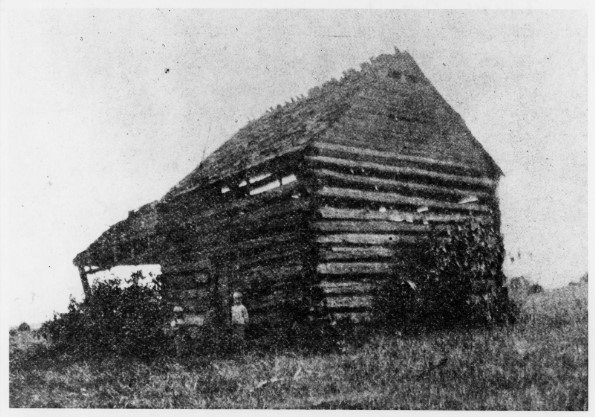
Bellevue Presbyterian Church, Caledonia, Missouri - circa 1830. This image shows the congregation's first building where Prentiss Bonney's marriages took place. It was the first Presbyterian church west of the Mississippi River.
In 1853, he embarked on a perilous journey to California during the Gold Rush, accompanied by his eldest son James Logan Bonney, but died of cholera at White Plains along the old Gold Rush Trail.
Read More: Complete biography of Prentiss Franklin Bonney
Sources: Missouri Bonney Family genealogy research by Gregory N. Bonney; U.S. Census records; Washington County, Missouri marriage records; U.S. Senate Journal records (1841).
Edward William Bonney (1807-1864)
Adventurer, Detective, Bounty Hunter, and Founder of Bonneyville Mill
Edward William Bonney was a 19th-century adventurer whose remarkable life encompassed roles as miller, hotel keeper, city planner, counterfeiter, livery stable keeper, bounty hunter, private detective, postmaster, merchant, soldier, and author. He is best known for his undercover work exposing the "Banditti of the Prairie" and investigating the torture-murder of noted Illinois pioneer Colonel George Davenport.
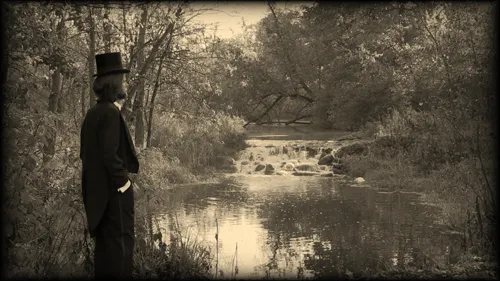
Portrait of Edward William Bonney (1807-1864), adventurer, detective, bounty hunter, and author.
In 1833, Bonney came to the Bristol, Indiana area from New York State, hoping to establish a community or business center along the Little Elkhart River. He built Bonneyville Mill in 1837, which today is designated by the Indiana State Historical Society as the oldest continuously operating grist mill in Indiana.
Bonney served as aide-de-camp to Joseph Smith in the Nauvoo Legion (1844) and was a member of the Mormon Council of Fifty. After moving to Iowa Territory, he worked as a bounty hunter and detective, eventually infiltrating the "Banditti of the Prairie" organization to bring the murderers of Colonel George Davenport to justice.
In 1850, he published The Banditti of the Prairies: or, The murderer's doom, a tale of Mississippi Valley and the Far West, which went through eight editions. During the Civil War, he enlisted in the 127th Illinois Volunteer Infantry Regiment and participated in the Siege of Vicksburg, where he received a paralyzing leg wound. He died in Chicago in 1864 as a result of his war injuries.
Read More: Complete biography of Edward William Bonney | Bonneyville Mill
Sources: Wikipedia - Edward Bonney; The Bonney Family by Charles L. Bonney (1898); The Banditti of the Prairies by Edward Bonney (1850); Joseph Smith Papers; Illinois Civil War Muster and Descriptive Rolls Database; Historical records from Elkhart County, Indiana, and Lee County, Iowa.
W. P. Bonney (1856-1945)
Historian, Secretary of Washington State Historical Society, and Namesake of Bonney Lake
William P. Bonney dedicated his life to recording the stories of Washington Territory and early statehood. As Secretary of the Washington State Historical Society and curator of the Ferry Museum in Tacoma, he preserved oral histories, artifacts, and documents that define the state's founding era.
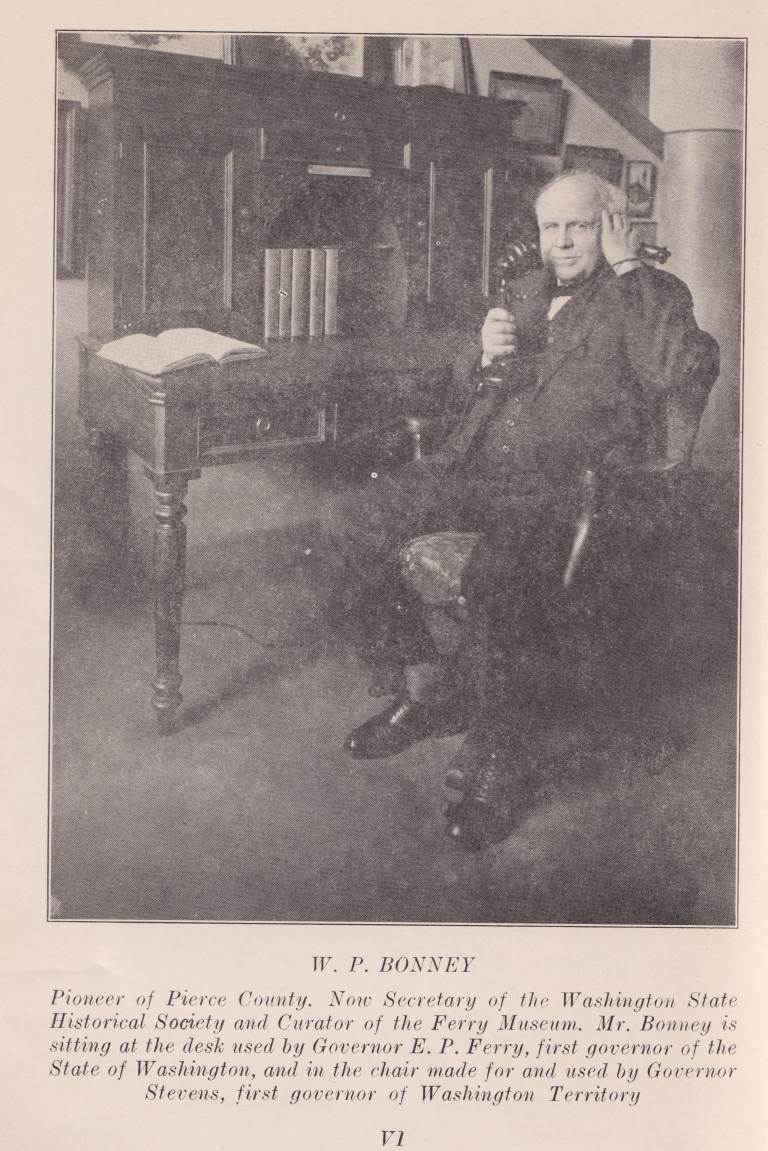
W. P. Bonney, Secretary of the Washington State Historical Society and Curator of the Ferry Museum, sitting at the desk used by Governor E. P. Ferry and in the chair made for Governor Stevens.
Bonney authored History of Pierce County, Washington (1926), a cornerstone reference for regional research. During the Great Depression, he served on the advisory committee of the Washington Pioneer Project (Works Progress Administration) and wrote the foreword to Told by the Pioneers, Volume II, where his own family narrative appears.
His advocacy for pioneer remembrance inspired communities to honor their roots. The town of Bonney Lake, Washington was named in his honor, recognizing his contributions to preserving the region's history. Born into a pioneer family that arrived in Washington Territory in 1852, Bonney understood firsthand the sacrifices and resilience of early settlers.
Read More: Complete biography of W. P. Bonney
Sources: William P. Bonney's writings; Washington Pioneer Project interviews; History of Pierce County, Washington (1926); Told by the Pioneers, Volume II (1938).
Elinor Amelia Bonney (1885-1962)
Family Chronicler and Diary Keeper
Elinor Amelia Bonney was born on January 16, 1885, in Cherry Grove, Wexford County, Michigan, and died on August 13, 1962, in Norwalk, Ohio. She was a dedicated family historian who kept detailed diaries spanning decades, providing invaluable insights into daily life in the early 20th century. Her extensive diary collection, beginning in 1912, documents the intersection of the Bonney and Wheeler family lines and captures the social and family dynamics of the era.
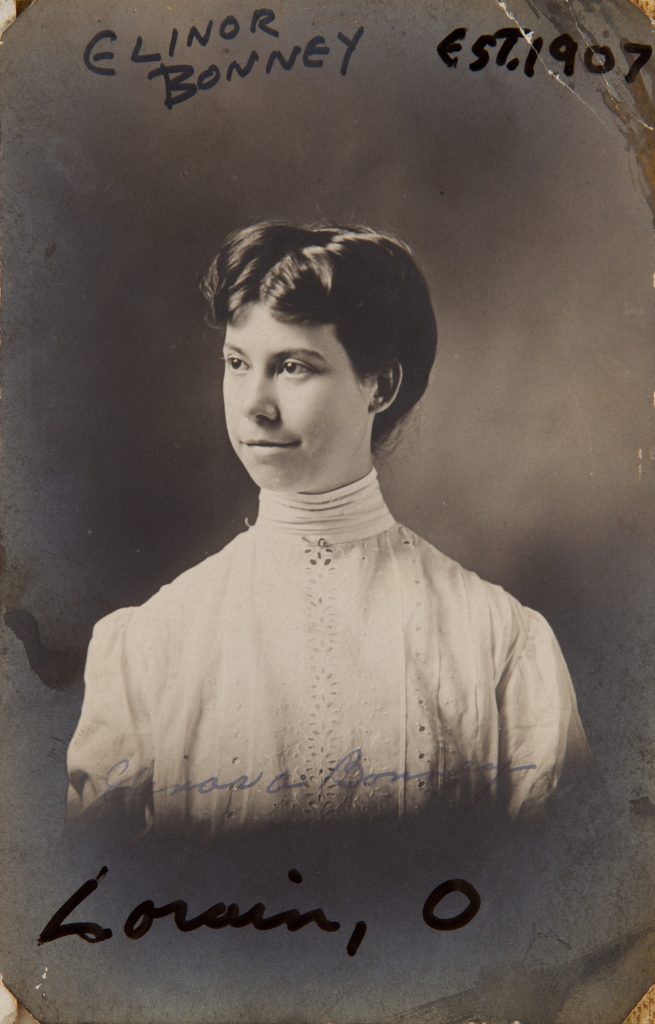
On May 17, 1920, Elinor married Frank Wiley Babcock in Lorain, Lorain County, Ohio. Her ancestry brings together the Bonney and Wheeler family lines through her parents' marriage. Her mother Martha Jane Wheeler married Harvey D. Bonney in 1879, uniting two prominent Ohio families. The Wheeler family had deep roots in Lorain County, Ohio, with connections to the Pomeroy and Harris families, while the Bonney line traced back to Massachusetts through Lyman Bonney (1810-1887).
Her diaries reveal the family's connections to Michigan, where she was born and where several family members homesteaded property, and document the close-knit relationships between extended family members. Elinor's writings provide a window into early 20th-century family life, including references to the Spanish Flu pandemic of 1918 and the challenges of rural life in Ohio and Michigan.
Read More: Complete biography of Elinor Amelia Bonney
Read Elinor's Diary: 1912-03 Elinor's Diary
Sources: Elinor Bonney's personal diaries (1912-1950s); Family genealogy records; Census data from Lorain County, Ohio and Wexford County, Michigan; Marriage and death records.